Comprehensive Guide to Bioreactor Process Control, Automation, and Monitoring
Introduction Bioreactors are essential equipment in biotechnology, pharmaceutical manufacturing, food production, environmental treatment, and industrial fermentation. They provide controlled environments where microorganisms, animal cells, plant cells, or enzymes carry out biological processes. The quality and consistency of the final output depend on several factors, including temperature, pH, dissolved oxygen, nutrient availability, mixing, and contamination control. Bioreactor process control, automation, and monitoring help maintain these conditions within defined operating ranges. Monitoring involves measuring process conditions, control involves adjusting them when necessary, and automation uses programmed systems to carry out routine operations with limited manual intervention. These functions are important in both laboratory research and large-scale manufacturing. For example, a small change in dissolved oxygen may influence microbial growth, while an unsuitable pH can affect cell viability or product formation. A well-designed control system helps operators identify changes, maintain consistent conditions, and record process information for analysis. This guide explains how bioreactor process control works, the main automation technologies, common monitoring methods, benefits, limitations, and factors to consider when selecting an appropriate system.
What Is Bioreactor Process Control?
Bioreactor process control is the management of physical, chemical, and biological conditions inside a bioreactor. The objective is to maintain suitable conditions for a particular biological process while reducing unwanted variation.
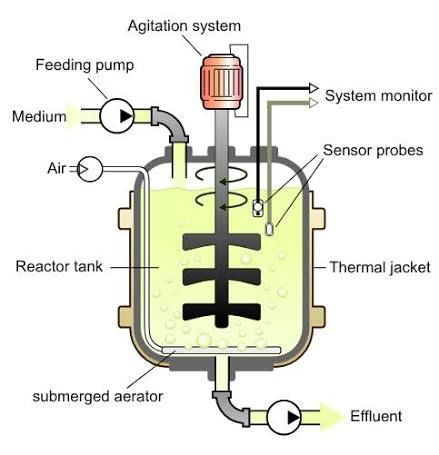
A typical system combines sensors, controllers, software, and mechanical equipment. Sensors measure process parameters, controllers compare measurements with target values, and actuators adjust equipment to maintain the desired conditions.
For example, if the temperature rises above its configured setpoint, the control system may adjust the cooling system. If dissolved oxygen falls below the target, it may increase agitation or change the gas supply, depending on the configured control strategy.
The appropriate operating range varies with the organism, cell type, medium, vessel design, and production objective. Therefore, control settings developed for one process should not automatically be applied to another.
Key Parameters Monitored in a Bioreactor
Several parameters help operators understand and manage bioreactor performance.
1. Temperature
Temperature influences cell growth, enzyme activity, metabolic reactions, and product formation. Temperature sensors provide measurements that can be used to control heating or cooling equipment.
Different organisms and cell lines require different temperature ranges. Maintaining a stable temperature is particularly important when biological activity generates significant heat.
2. pH
pH measures how acidic or alkaline the culture environment is. Changes in pH can affect nutrient availability, cellular activity, and product quality.
A pH monitoring system commonly uses a suitable probe and controller. Depending on the process, the system may add acid, base, or another approved reagent to correct deviations.
3. Dissolved Oxygen
Dissolved oxygen, often abbreviated as DO, indicates the oxygen available in the liquid culture. It is especially important in aerobic fermentation and many mammalian cell culture processes.
DO control may involve agitation, gas flow, oxygen enrichment, or other process adjustments. The appropriate response depends on the organism's oxygen requirements and the bioreactor's mass-transfer capabilities.
4. Agitation Speed
Agitation supports mixing, nutrient distribution, and gas transfer. It is usually controlled through a motor and an impeller or another mixing mechanism.
Insufficient agitation can create uneven conditions, while excessive agitation may increase energy consumption or cause shear-related stress in sensitive cells.
5. Gas Flow and Composition
Bioreactors may use air, oxygen, nitrogen, carbon dioxide, or other gases depending on the process. Gas flow and composition affect oxygen availability, pH, stripping of dissolved gases, and other process conditions.
Mass flow controllers and gas analyzers may be used to manage and measure gas delivery.
6. Foam and Liquid Level
Foam can interfere with gas exchange, contaminate exhaust filters, or cause material to leave the vessel. Foam sensors may trigger a controlled addition of antifoam when the process requires it.
Liquid-level or vessel-weight measurements can also support volume management and feeding calculations.
7. Nutrients and Biomass
Nutrient concentration and biomass are important indicators of biological activity. Some measurements can be taken continuously, while others rely on periodic sampling or analytical instruments.
Glucose, lactate, ammonia, cell density, and other variables may be monitored depending on the biological process and its objectives.
How Bioreactor Automation Works
Bioreactor automation connects measurement devices and operating equipment through a coordinated control system. It can range from a basic controller managing temperature and pH to a sophisticated platform coordinating multiple vessels, feeding strategies, alarms, data collection, and production records.
A typical automated control cycle follows these steps:
Sensors measure one or more process parameters.
The controller receives and evaluates the measurements.
The system compares actual values with configured setpoints or operating limits.
The controller sends commands to pumps, valves, motors, gas controllers, or heating and cooling systems.
Sensors measure the resulting conditions.
Software records the measurements, control actions, alarms, and relevant events.
This feedback cycle continues throughout the process. Operators can review trends, investigate deviations, and adjust approved process settings when necessary.
Automation does not eliminate the need for human oversight. Sensor faults, blocked lines, calibration errors, or unexpected biological changes can affect system performance. Operators must understand the process and know how to respond to abnormal conditions.
Types of Bioreactor Control Systems
Different control approaches are suitable for different levels of process complexity.
Manual Control
Operators read instruments and adjust equipment themselves. This approach can be useful for simple experiments, demonstrations, or processes where continuous automation is not necessary.
However, manual control can be time-consuming and may introduce variation between operators or production runs.
Basic Feedback Control
Feedback control automatically adjusts an operating variable based on the difference between the measured value and its target.
For example, a temperature controller may activate cooling when the measured temperature exceeds the setpoint. Feedback control reduces the need for constant manual adjustment.
PID Control
Proportional-integral-derivative, or PID, control is widely used in industrial process control. It calculates corrective actions based on the current error, accumulated error, and rate of change of the error.
PID controllers can regulate temperature, pH, agitation, and other variables when appropriately configured. Poor tuning, sensor delays, and interacting control loops can cause overshoot or instability.
Cascade Control
Cascade control uses two related control loops. The primary loop determines the required response, while the secondary loop adjusts a related variable more directly.
For example, a dissolved oxygen controller may request a change in agitation speed, while a separate speed controller ensures the motor reaches the requested setting. More complex DO strategies may coordinate agitation, airflow, and oxygen enrichment.
Supervisory and Computer-Based Control
Supervisory systems collect data from controllers and provide broader visibility across equipment or production areas. They may support process visualization, alarm management, batch records, trend analysis, and coordination with other manufacturing systems.
These systems are especially useful when multiple bioreactors or interconnected operations must be managed together.
Bioreactor Monitoring Technologies
Monitoring technologies provide information about the state of a biological process. The choice depends on the parameter, measurement accuracy, sampling frequency, process requirements, and available budget.
In-Line Monitoring
In-line sensors measure parameters directly within the bioreactor or its connected process stream. Examples include temperature probes, pH sensors, and dissolved oxygen sensors.
These instruments can provide frequent measurements without requiring repeated sample removal. Their accuracy depends on appropriate installation, calibration, cleaning, and maintenance.
At-Line Monitoring
At-line monitoring involves taking a sample from the process and analyzing it near the equipment. It can be useful for measurements that are not continuously available through installed sensors.
The results depend on sample handling, analysis time, and the suitability of the test method.
Off-Line Monitoring
Off-line monitoring involves transferring samples to a laboratory for analysis. Tests may include nutrient concentrations, metabolite levels, cell viability, product concentration, or other specialized measurements.
Although this approach can provide detailed information, delays between sampling and results may limit its usefulness for rapidly changing conditions.
Process Analytical Technology
Process Analytical Technology, commonly called PAT, uses suitable analytical tools to improve understanding and control of manufacturing processes. Depending on the application, it may include spectroscopy, gas analysis, automated sampling, and data-analysis software.
PAT can help operators interpret process changes and make decisions based on more than basic temperature or pH measurements.
Comparison of Monitoring and Control Methods
| Method | Main purpose | Key advantage | Main limitation |
|---|---|---|---|
| Manual control | Operator-led adjustments | Simple to implement | Requires frequent attention |
| PID control | Maintain a parameter at its setpoint | Continuous automatic correction | Depends on sensor quality and tuning |
| Cascade control | Coordinate related control loops | Supports complex process responses | Requires careful configuration |
| In-line monitoring | Measure process conditions directly | Frequent or continuous data | Sensor maintenance may be necessary |
| At-line monitoring | Analyze nearby samples | Flexible analytical options | Results are not always immediate |
| Off-line monitoring | Laboratory-based analysis | Supports detailed testing | Sampling and analysis take time |
| Supervisory automation | Coordinate and record multiple operations | Centralized visibility and records | Requires integration and system management |
A complete bioreactor setup often combines several of these approaches rather than relying on a single technology.
Benefits of Bioreactor Automation and Monitoring
Improved Process Consistency
Automated control can reduce variation caused by repeated manual adjustments. Maintaining defined conditions helps make process runs more comparable.
Better Process Visibility
Continuous measurements and trend displays help operators identify changes that may not be obvious during occasional checks.
More Efficient Use of Time
Automation can handle routine adjustments, scheduled feeding, and data recording. Staff can focus more on process evaluation, troubleshooting, and improvement.
Improved Documentation
Electronic records can help organizations review process history, investigate deviations, and support quality management. In regulated manufacturing, documentation must meet applicable data-integrity and recordkeeping requirements.
Support for Scale-Up
Monitoring and control data from smaller experiments can help teams understand how a process behaves before transferring it to larger equipment. However, scale-up also requires attention to oxygen transfer, mixing, heat removal, and other engineering differences.
Earlier Detection of Deviations
Alarm systems can notify operators when measurements cross configured limits. This can provide an opportunity to investigate problems before they have a greater effect on the process.
Limitations and Challenges
Automation and monitoring offer important benefits, but they also introduce technical and operational challenges.
Initial investment: Sensors, controllers, software, installation, validation, and training can increase the total cost of a bioreactor system.
Sensor reliability: Drift, fouling, damage, and calibration problems can produce misleading readings. Automated control based on incorrect measurements may make a process deviation worse.
System integration: Equipment from different manufacturers may use different communication protocols, software structures, and data formats. Integration requires planning and testing.
Process complexity: Biological systems are variable. A fixed control strategy may not respond adequately to every change in metabolism or cell behavior.
Maintenance requirements: Sensors, pumps, valves, tubing, filters, and control equipment require inspection and replacement as appropriate.
Data management and security: Electronic records must be protected against loss, unauthorized changes, and inappropriate access, particularly in regulated environments.
These challenges can be managed through proper system design, staff training, maintenance procedures, and documented operating practices.
Latest Trends in Bioreactor Process Control
Bioprocess technology continues to develop as manufacturers seek better process understanding, flexible production, and more consistent results.
1. Artificial Intelligence and Machine Learning
Artificial intelligence and machine learning can analyze historical and real-time process data to identify patterns, estimate process behavior, and support early detection of unusual conditions.
For example, a model may identify relationships between nutrient consumption, oxygen demand, and biomass growth. However, model accuracy depends on the quality and relevance of the training data. Predictions should be validated before being used to guide important process decisions.
2. Digital Twins
A digital twin is a virtual representation of a physical process or system. In bioprocessing, it may combine process measurements, mathematical models, and equipment information to simulate operating conditions.
Digital twins can support process development, scenario evaluation, and troubleshooting. Their usefulness depends on how accurately the model represents the biological and engineering behavior of the actual system.
3. Single-Use Bioreactor Automation
Single-use bioreactors use disposable bags or other product-contact components rather than relying entirely on reusable vessels. Automated controllers can manage temperature, pH, dissolved oxygen, gas delivery, and feeding.
These systems may reduce cleaning and sterilization requirements between certain operations, although disposable components create waste and require suitable supply-chain management.
4. Integrated Process Analytical Technology
Modern bioprocess platforms can combine sensor readings, analytical measurements, and software-based process analysis. This provides a broader understanding of biological activity and helps operators evaluate process changes.
5. Connected Data Systems
Integration between bioreactor controllers, supervisory control and data acquisition systems (SCADA), manufacturing execution systems (MES), and data historians can improve information flow.
Such integration requires clear data definitions, compatible interfaces, appropriate access controls, and careful management of electronic records.
Key Features to Consider When Selecting a System
Before choosing a bioreactor automation platform, review the following checklist.
Required control of temperature, pH, dissolved oxygen, agitation, and gas flow.
Compatibility with the intended cell culture or fermentation process.
Availability of suitable sensors and measurement ranges.
Support for batch, fed-batch, or continuous operation, as required.
Automated feeding, sampling, foam control, and other process functions.
Data logging, trend visualization, alarms, and report generation.
Integration with existing instruments and manufacturing software.
Requirements for electronic records, audit trails, and user permissions.
Scalability from laboratory development to pilot or production operations.
Technical support, operator training, spare parts, and maintenance costs.
The required feature set should follow the process needs. A research laboratory may prioritize experimental flexibility, while a regulated manufacturing facility may place greater emphasis on validated operation, traceability, and data integrity.
Leading Bioreactor Automation Companies and Solutions
Several established suppliers offer bioreactors, process controllers, monitoring instruments, and automation software. Their products differ in scale, application, configuration, and integration options.
Company
Example solution or platform
General focus
Sartorius
Biobrain automation platform and Biostat systems
Integrated bioprocess control and monitoring
Thermo Fisher Scientific
TruBio software and HyPerforma G3 controllers
Scalable control, automation, and data management
Eppendorf
Bioprocess controllers and DASware software
Laboratory and production process monitoring
Emerson
DeltaV automation platform
Industrial process control and manufacturing integration
Official resources:
Sartorius: https://www.sartorius.com/products/fermentation-bioreactors
Thermo Fisher Scientific: https://www.thermofisher.com/in/en/home/bioprocessing/products/single-use/automation-data-management.html
Eppendorf: https://www.eppendorf.com/in-en/Products/Bioprocess-c-WebPMain-H-44559
Emerson: https://www.emerson.com/
Sartorius describes its automation platform as supporting process control, data acquisition, and integration with higher-level systems. Thermo Fisher Scientific provides TruBio software and bioprocess controller options intended to support process development and scale-up. Eppendorf offers control and software systems for bioprocess monitoring, automation, and data analysis.

Related Post...
Comprehensive Guide to Bioreactor Process Control, Automation, and Monitoring
Updated: October 17, 2026
Read More
A Comprehensive Guide to Understanding Industrial Chemicals and Their Uses
Updated: October 17, 2026
Read More
Complete Overview of Industrial Forklift Truck Systems and Their Benefits
Updated: October 17, 2026
Read More