Learn About Crane Work, Different Equipment Types, Operating Principles, and Industrial Uses
Crane work plays an important role in construction, manufacturing, transportation, mining, and other industrial activities. Cranes are machines designed to lift, lower, and move heavy loads from one location to another. They help workers handle materials that would be difficult, time-consuming, or unsafe to move using manual methods. From lifting steel beams at construction sites to moving shipping containers in ports, cranes support a wide range of operations. Different cranes are designed for different environments, load capacities, lifting heights, and movement requirements. Selecting the right equipment depends on the work being performed, the available space, the weight of the load, and the surrounding conditions. Understanding crane work involves more than knowing how to operate a lifting machine. It also includes learning about crane types, mechanical components, operating principles, safety requirements, maintenance practices, and technological developments. This guide explains how cranes work, where they are used, their advantages and limitations, and the main factors to consider when choosing and maintaining crane equipment.
What Is Crane Work?
Crane work refers to activities involving the lifting, lowering, positioning, and movement of materials using crane equipment. These activities are commonly performed at construction sites, factories, warehouses, ports, power plants, and industrial facilities.
A crane uses mechanical systems to lift loads and move them horizontally or vertically. Depending on its design, it may operate through cables, pulleys, hydraulic cylinders, electric motors, gears, or a combination of these components.
Crane work can involve several tasks, including:
- Lifting construction materials to elevated floors.
- Moving machinery during installation or replacement.
- Loading and unloading goods from trucks and ships.
- Positioning steel structures and concrete components.
- Handling heavy materials in manufacturing facilities.
- Supporting maintenance work in industrial plants.
Because crane operations involve suspended loads and moving machinery, they require appropriate planning, trained personnel, suitable equipment, and clear communication.
How Do Cranes Work?
Most cranes operate by combining a lifting mechanism with a supporting structure and a system for controlling movement. Although designs vary, the basic operating principle remains similar.
1. Load Attachment
The load is connected to the crane using suitable lifting accessories, such as slings, hooks, shackles, or lifting beams. These accessories must be compatible with the load and its designated lifting points.
2. Lifting Mechanism
The hoist raises or lowers the load. Depending on the crane, the hoist may use a wire rope, chain, electric motor, hydraulic system, or mechanical arrangement.
3. Load Movement
Some cranes move loads horizontally along a beam or runway. Others use a rotating structure, a movable boom, or a travelling chassis to position materials.
4. Load Positioning
The operator moves the load toward the required location while maintaining control of its movement. Accurate positioning is especially important when installing machinery or placing structural components.
5. Lowering and Release
Once the load reaches its intended position, it is lowered carefully and secured. The lifting accessories are removed only when the load is stable and safe to release.
Crane stability is essential throughout the process. The crane's rated capacity may vary with boom length, boom angle, working radius, configuration, and other conditions. Therefore, operators must follow the equipment's load charts and operating instructions rather than relying on the crane's maximum advertised capacity alone.
Main Types of Cranes and Their Applications
Cranes are available in several categories, each designed for specific working environments and lifting requirements.
1. Mobile Cranes
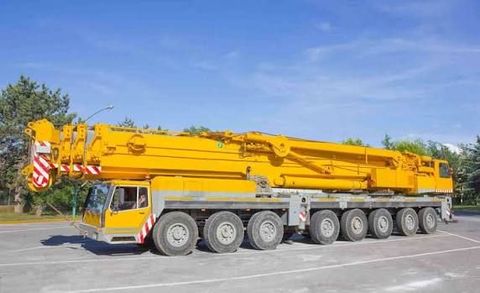
Mobile cranes are mounted on wheeled or tracked carriers, allowing them to be moved between locations. Many use telescopic booms to reach different heights and distances.
They are commonly used for construction projects, equipment installation, infrastructure work, and industrial maintenance.
Advantages:
- Can be transported between job sites.
- Offer flexibility for temporary lifting tasks.
- Available in different capacities and configurations.
Limitations:
- Require suitable ground conditions and adequate setup space.
- May need outriggers or other stabilizing arrangements.
- Their lifting capacity can decrease significantly as working radius increases.
2. Tower Cranes
Tower cranes are frequently used in high-rise construction and large building projects. They generally consist of a tall mast, a horizontal jib, a counter-jib, and a lifting mechanism.
Tower cranes can lift materials to substantial heights while covering a wide working area.
Advantages:
- Suitable for tall structures.
- Can serve large construction areas.
- Help move materials between different building levels.
Limitations:
- Require careful installation and dismantling.
- Need suitable foundations and structural support.
- Their operation must account for wind, nearby structures, and site restrictions.
3. Overhead Cranes
Overhead cranes operate on elevated runways, usually inside factories, workshops, warehouses, and manufacturing plants. A bridge moves along the runway, while a trolley carries the hoist across the bridge.
These cranes are particularly useful when heavy materials must be moved repeatedly within a fixed area.
Advantages:
- Make effective use of overhead space.
- Support repetitive material-handling tasks.
- Reduce the need for floor-level transport in some facilities.
Limitations:
- Require suitable building structures or dedicated supporting frameworks.
- Usually operate within a defined runway area.
- Installation and maintenance may disrupt facility operations.
4. Gantry Cranes
Gantry cranes have a bridge supported by legs that travel on wheels or rails. Depending on the design, they may operate outdoors or inside industrial facilities.
They are commonly used in shipyards, ports, fabrication yards, and storage areas.
Advantages:
- Can handle large or heavy materials.
- Some designs do not require an existing overhead runway.
- Useful for outdoor material handling.
Limitations:
- Require sufficient operating and travel space.
- Need suitable ground or rail support.
- Large models may involve complex installation and inspection requirements.
5. Crawler Cranes
Crawler cranes move on tracked undercarriages instead of conventional road wheels. Their tracks distribute the machine's weight across a larger contact area, although ground suitability still needs to be assessed.
They are often used for major infrastructure projects, heavy construction, and large industrial installations.
Advantages:
- Can travel around some construction sites without conventional road wheels.
- Suitable for certain heavy-lifting applications.
- Provide a stable platform when properly configured.
Limitations:
- Can be difficult to transport between sites.
- May require extensive assembly.
- Ground pressure, soil conditions, and travel routes must be evaluated.
6. Jib Cranes
Jib cranes have a horizontal or angled arm attached to a vertical support or wall-mounted structure. They are often installed in workshops, assembly areas, and maintenance stations.
They are useful for lifting materials within a smaller, defined working area.
Advantages:
- Suitable for localized lifting tasks.
- Can help reduce manual handling.
- Available in floor-mounted and wall-mounted designs.
Limitations:
- Have a limited working area compared with some larger cranes.
- Require suitable structural support.
- Their capacity and rotation range depend on the specific design.
7. Floating and Shipboard Cranes
Floating cranes are installed on barges or other floating platforms and are used for lifting heavy materials in marine environments. Shipboard cranes are fitted to vessels for cargo handling and other onboard lifting tasks.
These cranes are used in port construction, offshore projects, shipbuilding, and marine transportation.
Advantages:
- Support lifting operations over water.
- Can handle certain large marine construction loads.
- Help load and unload materials where shore-based cranes are unsuitable.
Limitations:
- Operations are affected by waves, wind, and vessel movement.
- Require specialized planning and trained personnel.
- May involve complex stability and load-control considerations.
Crane Types Comparison Table
The following table provides a general comparison of common crane types. Actual capabilities depend on the specific model and configuration.
| Crane Type | Typical Working Environment | Main Applications | Key Consideration |
|---|---|---|---|
| Mobile crane | Construction sites and industrial locations | Equipment installation and general lifting | Ground conditions and lifting radius |
| Tower crane | High-rise construction | Lifting materials to elevated floors | Height, foundation, and wind conditions |
| Overhead crane | Factories and workshops | Repetitive indoor material handling | Runway design and building structure |
| Gantry crane | Ports, yards, and industrial facilities | Container and heavy-material handling | Ground support and travel space |
| Crawler crane | Large construction projects | Heavy lifting and infrastructure work | Ground pressure and transportation |
| Jib crane | Workshops and assembly stations | Localized lifting tasks | Working radius and mounting strength |
| Floating crane | Marine and offshore environments | Marine construction and heavy cargo handling | Water conditions and platform stability |
Benefits and Limitations of Crane Work
Cranes help industries move heavy materials efficiently, but their performance depends on correct selection, setup, operation, and maintenance.
Benefits of Crane Work
Improved material handling: Cranes can lift and move loads that would otherwise require extensive manual work or several pieces of handling equipment.
Support for heavy lifting: Suitable cranes can handle large machinery, structural steel, containers, and other heavy materials within their rated operating limits.
Better use of available space: Overhead and tower cranes can move loads above ground-level work areas, helping reduce congestion in suitable environments.
Greater positioning accuracy: With proper controls and skilled operators, cranes can place materials in specific locations during construction and installation.
Support for industrial productivity: Cranes can reduce handling time in factories, ports, and warehouses, particularly when lifting is a frequent part of the workflow.
Limitations of Crane Work
Despite these advantages, cranes also present important limitations.
- High operating costs: Equipment rental, transportation, installation, fuel or electricity, and maintenance can add to project costs.
- Safety risks: Suspended loads, crane instability, equipment failure, and collisions can cause serious injuries or property damage.
- Space requirements: Some cranes need large operating areas, clear travel paths, or room for stabilizing equipment.
- Weather restrictions: Wind, lightning, rain, and poor visibility can affect lifting operations.
- Technical requirements: Operators and supporting personnel need suitable training and an understanding of the equipment and lifting plan.
Crane work should therefore be evaluated in terms of both productivity and risk. A machine that lifts a load successfully is not necessarily the best choice if the surrounding conditions make the operation unsafe or impractical.
Key Features to Consider When Selecting a Crane
The right crane should match the actual lifting task rather than simply offering the greatest lifting capacity.
1. Rated Lifting Capacity
Determine the total load weight, including relevant lifting accessories. The crane must be suitable for that load at the required working radius and configuration. Its rated capacity must not be treated as a universal limit that applies in every operating condition.
2. Lifting Height and Working Radius
Lifting height refers to how high the load must be raised. Working radius generally refers to the horizontal distance between the crane's axis of rotation and the load's lifting position.
A crane may have sufficient capacity at a short radius but a lower permissible capacity when reaching farther away. Always consult the manufacturer's load chart for the actual configuration.
3. Site Conditions
Evaluate ground strength, available space, overhead obstructions, access routes, nearby power lines, and surrounding structures. Indoor installations also require consideration of ceiling height and structural support.
4. Power and Control Systems
Cranes may use electric motors, hydraulic systems, diesel engines, or combinations of these technologies. The most suitable arrangement depends on the operating environment, duty cycle, energy availability, and maintenance requirements.
5. Safety Features
Depending on the crane type, useful safety systems may include load indicators, overload protection, limit switches, emergency stops, brakes, anti-collision systems, and alarms.
These features support safe operation but do not replace proper planning, inspections, or operator judgment.
6. Maintenance and Parts Availability
Consider inspection requirements, access to replacement parts, service support, and the expected workload. Equipment that is difficult to maintain may create additional downtime over its working life.
Latest Trends and Innovations in Crane Technology
Crane technology continues to develop as industries seek improved safety, better visibility, more reliable operation, and lower energy consumption.
Automation and Remote Operation
Some modern crane systems can perform predefined movement sequences or be operated remotely. Automation is particularly relevant to repetitive tasks in ports, warehouses, and manufacturing facilities. Human supervision and appropriate safety controls remain essential.
Sensors and Digital Monitoring
Sensors can monitor operating conditions such as load, movement, temperature, and equipment status. Digital monitoring systems help operators and maintenance teams identify irregular conditions and review equipment performance.
Predictive Maintenance
Traditional maintenance often follows fixed schedules or responds after a problem occurs. Predictive maintenance uses operating data and condition monitoring to help identify possible faults before they cause major downtime. Its effectiveness depends on reliable data, suitable analysis, and timely maintenance action.
Electrification and Energy Efficiency
Electric and hybrid crane systems can reduce local exhaust emissions compared with some conventional diesel-powered alternatives. Their overall environmental benefits depend on the power source, operating pattern, equipment design, and energy requirements.
Improved Operator Assistance
Cameras, visibility aids, load-monitoring displays, and anti-collision technologies can help operators understand their surroundings and manage lifting movements. These systems are most effective when combined with clear procedures and appropriate training. Siemens Industry Support
Top Crane Manufacturers and Equipment Solutions
Crane manufacturers produce equipment for different industries, load requirements, and working environments. Comparing manufacturers can help businesses understand available technologies, equipment categories, and technical specifications.
Examples of established manufacturers include:
- Liebherr: Offers crane equipment for construction, mobile lifting, tower crane operations, and maritime applications. Official website: Liebherr
- Tadano: Known for mobile cranes, all-terrain cranes, and other lifting equipment used in construction and industrial applications. Official website: Tadano
- Manitowoc: Provides crane equipment for construction and heavy lifting, including crawler and tower crane categories. Official website: Manitowoc
- Konecranes: Focuses on industrial lifting equipment, including overhead cranes, hoists, and port-handling solutions. Official website: Konecranes
- XCMG: Manufactures construction machinery, including mobile and other crane equipment. Official website: XCMG
These companies operate in different equipment segments, so they should not be compared solely on lifting capacity or brand recognition. The appropriate comparison depends on the crane type, local service availability, technical requirements, and intended application.
How to Choose the Right Crane for a Project
Choosing suitable equipment starts with understanding the lifting task and the conditions in which it will take place.
Use the following checklist during the planning process.
Crane Selection Checklist
- Identify the load: Confirm the weight, dimensions, shape, and centre of gravity of the material.
- Determine the lifting height: Establish how high the load must be raised and where it needs to be placed.
- Calculate the working radius: Identify the horizontal reach required for the lift.
- Assess the site: Check ground conditions, available space, access routes, and overhead obstructions.
- Choose the crane category: Compare mobile, tower, overhead, gantry, crawler, and other suitable designs.
- Review the load chart: Confirm that the crane's rated capacity covers the planned configuration and operating radius.
- Check safety requirements: Identify necessary lifting accessories, safety systems, permits, and inspection requirements.
- Evaluate operating costs: Consider transportation, setup, energy, maintenance, and expected usage.
- Confirm personnel competency: Ensure operators and other workers have the required training and qualifications.
- Prepare a lifting plan: Define responsibilities, communication methods, load movement, exclusion zones, and emergency arrangements.
For complicated or high-risk lifting activities, a competent lifting professional should assess the conditions and prepare the required plan. A crane should not be selected using load weight alone because reach, height, stability, and site restrictions can substantially affect the decision.
Crane Operation, Safety, and Maintenance Best Practices
Safe crane operation requires coordination between the operator, lifting supervisor, riggers, signal persons, and other workers involved in the task.
Before Operation
Inspect the crane and its lifting accessories according to the manufacturer's instructions and applicable regulations. Check the condition of wire ropes or chains, hooks, brakes, controls, safety devices, and hydraulic or electrical systems, as relevant to the equipment.
Verify the load weight, lifting points, travel path, ground conditions, and weather restrictions. Establish clear communication signals and prevent unauthorized people from entering the lifting area.
During Operation
Operators should follow the approved lifting plan, the crane's load chart, and the manufacturer's instructions. Loads should be raised and lowered in a controlled manner, avoiding sudden movements and prohibited side loading.
Workers must remain clear of suspended loads. If visibility is restricted, an appropriately trained signal person or another approved communication system may be necessary. Crane operation should stop if unsafe conditions develop or the operator cannot maintain adequate control.
After Operation
Lower and secure the load before disconnecting lifting accessories. Park or secure the crane according to the manufacturer's instructions, isolate equipment when required, and report any defects discovered during use.
Routine Maintenance
Maintenance requirements vary by crane type and operating conditions. Common practices include:
- Inspecting wire ropes, chains, hooks, and lifting accessories for wear or damage.
- Checking brakes, motors, gears, and hydraulic components.
- Testing limit switches and other safety devices as specified.
- Lubricating moving parts according to the maintenance schedule.
- Checking for leaks, unusual noises, overheating, or abnormal movement.
- Maintaining inspection, repair, and service records.
- Removing defective equipment from service until it has been assessed and repaired by authorized personnel.
Inspection intervals and legal requirements differ by jurisdiction and equipment category. Follow the applicable standards and the manufacturer's maintenance documentation. For further guidance, consult the official Occupational Safety and Health Administration crane safety resources. OSHA
Frequently Asked Questions About Crane Work
1. What is the main purpose of a crane?
The main purpose of a crane is to lift, lower, and move loads. Cranes are used in construction, manufacturing, shipping, warehousing, and many other industries where heavy materials need to be positioned.
2. Which crane is commonly used in construction?
Mobile cranes and tower cranes are widely used in construction. Mobile cranes are useful for lifting at different locations, while tower cranes are often used for high-rise buildings and projects that require repeated lifting over a large area.
The best option depends on the building height, load requirements, site conditions, and project duration.
3. How is crane lifting capacity determined?
Lifting capacity depends on the crane's design and configuration, including factors such as boom length, working radius, counterweight arrangement, and stabilizer or outrigger setup. The manufacturer’s load chart specifies the permissible capacity for different operating conditions.
4. What qualifications are needed for crane work?
Requirements vary according to the crane type, location, employer, and applicable regulations. Crane operators generally need appropriate training and authorization, while riggers and signal persons must be competent for their assigned responsibilities. Some jurisdictions require specific licences or certifications.
5. What are the most common crane safety risks?
Common risks include crane overturning, structural failure, dropped loads, collisions, contact with power lines, equipment malfunction, and workers entering hazardous lifting areas. Proper planning, inspections, training, communication, and load control help reduce these risks.
6. How often should cranes be inspected?
Inspection frequency depends on the equipment, operating environment, applicable regulations, and manufacturer's instructions. Operators should carry out required pre-use checks, while more detailed inspections and maintenance must follow the prescribed schedule. Defects that could affect safe operation must be addressed before the crane returns to service.
7. Can one crane be used for every type of lifting task?
No. Cranes differ in lifting capacity, reach, mobility, height, and installation requirements. A mobile crane may suit temporary outdoor lifting, while an overhead crane may be more practical for repetitive lifting inside a factory. Each task requires an assessment of the load and working conditions.
Conclusion
Crane work is an essential part of modern construction, manufacturing, logistics, and industrial operations. Different crane types serve different purposes, from lifting materials at high-rise construction sites to moving heavy components inside factories and handling cargo at ports.
Understanding crane operating principles, load capacity, working radius, site conditions, and safety requirements helps organizations make informed equipment decisions. Maintenance, operator training, and effective communication are equally important for reliable performance.
New developments in automation, digital monitoring, remote operation, and electrification are changing how some crane systems are operated and maintained. However, technology does not eliminate the need for proper planning and competent personnel.
The most practical approach is to select a crane based on the specific lifting task, follow its operating limits, maintain it according to the manufacturer's instructions, and make safety a central part of every lifting operation.

Related Post...

Industrial Cybersecurity Guide: Key Concepts, Risks & Security Methods
Updated: October 24, 2026
Read More
Guide to Industrial Equipment Care: Cleaning, Lubrication & Maintenance
Updated: October 24, 2026
Read More
Guide tof High-Pressure Water Pump Systems: Types, Applications, and Considerations
Updated: October 27, 2026
Read More