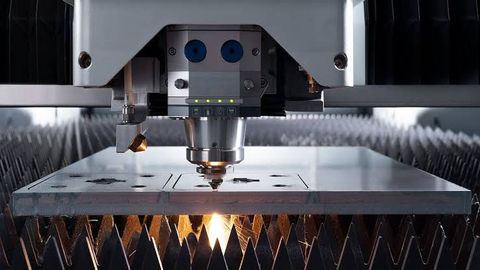
A Comprehensive Guide to Laser Cutting Machines, Their Functions, and Applications
Introduction Laser cutting machines are widely used in modern manufacturing because they can cut, engrave, and shape materials with a high degree of precision. They use a concentrated beam of light to remove material along a programmed path, allowing manufacturers to create components with specific dimensions and designs. These machines are used in industries ranging from automotive manufacturing and electronics to construction, signage, furniture production, and metal fabrication. Traditional cutting methods, such as sawing, punching, and mechanical shearing, remain useful for many applications. However, laser cutting offers different advantages, including the ability to produce intricate shapes, reduce direct tool contact, and automate repetitive cutting tasks. The performance of a laser cutting machine depends on several factors, including the laser source, material type, material thickness, cutting speed, power settings, and machine configuration. Not every machine is suitable for every material, so understanding the available technologies is essential before selecting equipment. This guide explains how laser cutting machines work, their major types, common functions, industrial applications, benefits, limitations, and important factors to consider when choosing and maintaining a system.
What Is a Laser Cutting Machine?
A laser cutting machine is a device that uses a focused laser beam to cut or process a material. The beam concentrates energy into a small area, heating the material until it melts, vaporizes, or breaks down. Depending on the process, an assist gas may help remove molten material from the cutting area.
Most industrial laser cutting machines use computer numerical control (CNC) systems. These systems interpret digital designs and guide the laser head or workpiece along a programmed cutting path. This makes it possible to reproduce shapes accurately and manufacture multiple components with consistent dimensions.
A typical laser cutting system includes a laser source, beam delivery components, focusing optics, a cutting head, a motion-control system, a worktable, an assist-gas supply, and a control interface. Industrial systems also require suitable ventilation, protective enclosures, and safety interlocks.
Laser cutting differs from conventional mechanical cutting because the laser does not need to press a physical blade against the material. Nevertheless, the process still requires careful setup, correct material selection, and suitable operating parameters.
How Do Laser Cutting Machines Work?
Laser cutting involves several coordinated steps.
1. Design Preparation
The cutting process begins with a digital drawing or design created in computer-aided design (CAD) software. The design is converted into instructions that the machine can interpret.
2. Laser Generation
The laser source generates a beam with the characteristics required for the intended material and cutting process. The beam's power, wavelength, and quality influence the machine's performance.
3. Beam Focusing
Optical components direct and focus the beam onto a small area of the workpiece. Concentrating the energy increases the local temperature and enables controlled material removal.
4. Material Cutting
The focused beam heats the material until it melts, vaporizes, or undergoes another suitable removal process. Assist gas may help clear molten material and improve the cutting edge.
5. Motion and Process Control
The CNC system coordinates movement along the cutting path. Operators configure settings such as power, speed, focus position, and assist-gas pressure according to the material and required finish.
6. Inspection and Finishing
After cutting, the component is inspected for dimensional accuracy, edge quality, burrs, and other defects. Depending on the application, additional deburring, cleaning, bending, or surface finishing may be necessary.
Main Types of Laser Cutting Machines
Laser cutting technologies differ according to the laser source, wavelength, material compatibility, and intended use.
1. Fiber Laser Cutting Machines
Fiber lasers generate the beam through an optical fiber doped with rare-earth elements. They are widely used for cutting metals such as mild steel, stainless steel, and aluminum, subject to the machine's capabilities and material specifications.
Fiber laser systems are commonly found in sheet-metal fabrication, automotive component production, electrical enclosures, and industrial equipment manufacturing. They are often selected for their electrical efficiency, beam characteristics, and suitability for automated production.
However, their performance varies with material thickness, reflectivity, laser power, and machine design. Cutting copper, brass, and other reflective metals requires equipment specifically designed for those materials.
2. CO2 Laser Cutting Machines
CO2 lasers generate infrared light using a gas-based laser source. They are commonly used for processing non-metallic materials such as acrylic, wood, paper, cardboard, and certain plastics.
Depending on their configuration and power, CO2 systems can also cut some metals. However, modern fiber lasers are often preferred for many industrial sheet-metal applications.
CO2 lasers are used in signage, packaging, decorative products, woodworking, and selected manufacturing operations. They require suitable optical maintenance and careful control of exhaust gases and material emissions.
3. Nd and Other Solid-State Laser Systems
Neodymium-doped yttrium aluminum garnet (Nd) lasers are solid-state systems that have been used for cutting, drilling, marking, and precision material processing. Depending on the system, they may operate in pulsed or continuous-wave modes.
They are relevant to certain specialized applications involving small components, precision work, and materials requiring controlled energy delivery. Other solid-state laser technologies are also used for industrial processing.
4. Ultrafast Laser Systems
Ultrafast lasers produce extremely short pulses, typically in the picosecond or femtosecond range. These systems can process materials with limited heat transfer to the surrounding area under appropriate conditions.
They are used in specialized applications such as microfabrication, precision electronics, medical-device manufacturing, and delicate material processing. Their equipment and operating costs can be higher than those of conventional cutting systems.
5. Laser Engraving and Marking Machines
Laser engravers and marking systems use focused energy to create text, patterns, identification codes, or surface changes. Some machines can also cut thin materials, but engraving and marking equipment should not automatically be treated as suitable for production cutting.
These systems are commonly used for product identification, labels, signage, customized components, and traceability marking.
Comparison of Laser Cutting Machine Types
| Machine type | Common materials | Typical applications | Main consideration |
|---|---|---|---|
| Fiber laser | Many industrial metals | Sheet-metal fabrication and machinery | Reflectivity, thickness, power, and cutting quality |
| CO2 laser | Wood, acrylic, paper, and selected plastics | Signage, packaging, and decorative products | Material compatibility, optics, and ventilation |
| Nd and other solid-state lasers | Selected metals and specialized materials | Precision processing and marking | Pulse characteristics and application requirements |
| Ultrafast laser | Specialized metals, glass, ceramics, and other materials | Microfabrication and precision work | Equipment cost and process complexity |
| Laser engraving or marking system | Materials supported by the specific machine | Identification, labels, and surface marking | Whether cutting capability is actually included |
The best technology depends on the material, thickness, required tolerances, production volume, and total operating cost.
Key Functions of Laser Cutting Machines
Laser cutting machines can perform several functions, depending on their design and software.
Cutting
The primary function is separating material along a defined path. Machines can produce straight cuts, curves, holes, slots, and complex outlines.
Engraving
Engraving creates patterns, text, or designs on a surface. The depth and appearance depend on the material and laser settings.
Marking
Laser marking creates identification information, serial numbers, barcodes, or other markings. It can support traceability and product identification in manufacturing.
Piercing
Piercing creates an initial opening in the material before cutting begins. Proper piercing settings help control spatter, edge damage, and processing time.
Nesting and Material Utilization
Nesting software arranges multiple components within a sheet or workpiece. Effective nesting can reduce scrap and improve material utilization, although the results depend on part geometry, cutting constraints, and production requirements.
Automated Production
Some systems integrate automatic loading, unloading, material storage, and production monitoring. These features can reduce manual handling and help maintain consistent output in high-volume environments.
Industrial Applications of Laser Cutting Machines
Laser cutting machines support a wide range of manufacturing and fabrication tasks.
Automotive Manufacturing
Automotive manufacturers use laser cutting to produce sheet-metal components, brackets, panels, interior parts, and selected structural components. Laser processing can also support prototyping and the production of complex shapes.
Aerospace and Aviation
Laser cutting is used for selected aerospace components where precise dimensions and controlled material processing are important. Material certification, process validation, and strict inspection requirements are essential in this sector.
Electronics and Electrical Equipment
Manufacturers use laser systems to produce enclosures, panels, precision parts, and selected electronic components. Fine cutting and marking can support compact product designs and identification requirements.
Construction and Metal Fabrication
Fabrication shops use laser cutting to manufacture brackets, support components, architectural panels, metal frames, and parts for industrial equipment. The process can handle complex shapes that might otherwise require several cutting operations.
Signage and Advertising
CO2 and other suitable laser systems are used to cut or engrave acrylic, wood, and certain other materials for signs, lettering, displays, and decorative panels.
Medical Device Manufacturing
Specialized laser systems can process selected components used in medical devices and instruments. Applications may require strict control over heat effects, surface quality, cleanliness, and dimensional accuracy.
Furniture and Interior Design
Laser cutting supports decorative panels, custom furniture parts, templates, and intricate designs in compatible materials. The machine must be configured appropriately for the material and its thickness.
Benefits of Laser Cutting Machines
Laser cutting offers several practical advantages when the technology is matched to the application.
Precision: Focused beams and CNC motion control can produce detailed shapes and repeatable dimensions.
Design flexibility: Digital cutting paths allow complex profiles to be created without manufacturing a dedicated physical cutting tool.
Reduced mechanical contact: The process avoids direct blade-to-workpiece cutting forces, although clamping and material support are still necessary.
Automation: CNC programming and automated handling can support repeatable production.
Material efficiency: Suitable nesting strategies and narrow cutting kerfs can help reduce waste.
Versatility: Different laser technologies can process metals, wood, acrylic, and other compatible materials.
Consistent production: Controlled settings can help produce uniform components across repeated manufacturing runs.
These benefits are not guaranteed in every application. Actual performance depends on the machine, material, operator skill, process settings, and maintenance condition.
Limitations and Challenges
Despite their advantages, laser cutting machines have limitations that should be considered before investment.
Initial Equipment Cost
Industrial systems can require substantial investment in the laser source, machine frame, optics, extraction equipment, software, and safety infrastructure.
Material and Thickness Restrictions
Each machine has a defined operating range. Some materials are difficult or unsafe to process, while thick materials may require higher power, slower cutting, or a different manufacturing method.
Heat-Affected Zones
Laser cutting can create a heat-affected zone near the cut edge. Depending on the material and settings, this may affect surface quality, hardness, or dimensional stability.
Operating and Maintenance Requirements
Optics, nozzles, filters, cooling systems, and other components may require cleaning, inspection, or replacement. Costs vary by machine design and production intensity.
Safety Considerations
Laser radiation, fumes, fire risk, electrical systems, and compressed gases require appropriate controls. Reflective materials can introduce additional hazards if the machine is not designed for their processing.
Skilled Operation
Operators need training in material selection, machine setup, process parameters, fault identification, and safety procedures. Complex systems may also require specialist maintenance.
Latest Trends and Innovations in Laser Cutting
Laser cutting continues to develop through improvements in automation, control software, and process monitoring.
Higher-Power Fiber Laser Systems
Higher-power systems can increase productivity for certain metal-cutting applications. However, the actual benefit depends on material thickness, edge-quality requirements, gas consumption, and the machine's complete process capability.
Smart Manufacturing Integration
Modern machines may connect with manufacturing execution systems, production planning software, and factory monitoring platforms. This can improve job tracking, maintenance planning, and production visibility.
Artificial Intelligence and Process Monitoring
Some systems use sensors, cameras, and software to monitor cutting conditions and identify process irregularities. These features may help operators detect problems earlier, although their capabilities vary by manufacturer.
Automated Material Handling
Loading towers, robotic unloading, and automatic sheet handling can reduce manual work and support continuous production. Their value depends on throughput, floor space, and production scheduling.
Improved Energy and Material Management
Manufacturers increasingly assess energy use, assist-gas consumption, scrap generation, and equipment utilization. Better process planning can help reduce operating costs and environmental impact.
Key Features to Consider Before Buying
Before selecting a laser cutting machine, evaluate the following features.
Laser power: Confirm that the power level suits the materials and thicknesses you expect to process.
Working area: Choose a table size that accommodates typical workpieces and sheet dimensions.
Material compatibility: Verify that the laser source is suitable for all intended materials.
Cutting accuracy: Review documented tolerances and edge-quality performance for relevant applications.
Motion system: Consider positioning accuracy, repeatability, and performance at the required production speed.
Control software: Check file compatibility, nesting tools, programming workflow, and ease of operation.
Cooling system: Ensure the cooling arrangement matches the machine's operating requirements.
Fume extraction: Confirm that the ventilation and filtration system is suitable for the materials being processed.
Safety features: Look for appropriate enclosures, interlocks, emergency stops, and protective measures.
Maintenance access: Evaluate the availability of replacement parts, service support, and technical documentation.
Total cost of ownership: Include electricity, assist gases, consumables, maintenance, training, and downtime in the budget.
Top Laser Cutting Machine Manufacturers and Solutions
Several established manufacturers offer laser cutting equipment for different production requirements. Comparing their machine configurations, service networks, software, and application capabilities can help organizations evaluate suitable options.
| Manufacturer | General focus | Website |
|---|---|---|
| TRUMPF | Industrial sheet-metal, tube, and 3D laser processing | https://www.trumpf.com/ |
| Bystronic | Sheet-metal processing and automated cutting systems | https://www.bystronic.com/ |
| AMADA | Sheet-metal machinery, including laser cutting equipment | https://www.amada.com/ |
| Mazak | Industrial laser processing and manufacturing systems | https://www.mazak.com/ |
| Mitsubishi Electric | Industrial laser processing and automation technologies | https://www.mitsubishielectric.com/ |
These manufacturers offer different product ranges, and not every company supplies every type of laser cutting system in every region. Confirm the availability of specific models and local technical support before making a decision.
When comparing machines, review documented cutting performance, material thickness capabilities, operating costs, software compatibility, safety features, warranty terms, spare-parts availability, and service response times. Requesting a sample cut using your own material can help evaluate edge quality and dimensional accuracy under relevant conditions.
How to Choose the Right Laser Cutting Machine
Choosing suitable equipment begins with understanding the work the machine must perform. A system designed for thin sheet metal may not be appropriate for thick structural plates, while a compact engraving machine may not support industrial production volumes.
Step 1: Identify the Materials
List the materials you plan to process, including their grades, thicknesses, dimensions, and surface conditions. Confirm that the selected laser technology is suitable for those materials.
Step 2: Define Production Requirements
Estimate the number of parts required per day or month, the complexity of the designs, and the expected production schedule. Small workshops may prioritize flexibility and ease of use, while high-volume manufacturers may need automated material handling.
Step 3: Determine Accuracy Requirements
Review the required tolerances, hole sizes, edge quality, and finishing needs. Ask manufacturers for application-specific performance data rather than relying only on general machine specifications.
Step 4: Evaluate Software and Automation
Check whether the control software supports your existing design files and production workflow. Consider nesting, job scheduling, automatic loading, unloading, and integration with other manufacturing equipment.
Step 5: Calculate Total Operating Costs
The purchase price is only one part of the overall cost. Include electricity, assist gases, consumables, maintenance, extraction filters, operator training, and potential production downtime.
Step 6: Assess Safety and Support
Verify that the machine includes appropriate protective systems and that the installation location can accommodate its ventilation, electrical, cooling, and space requirements. Check local service availability and the expected delivery time for critical replacement parts.
Step 7: Test the Machine for Your Application
Where possible, arrange a demonstration using representative materials and designs. Evaluate cut quality, processing time, repeatability, and any finishing operations required after cutting.
Best Practices for Operating and Maintaining Laser Cutting Machines
Regular maintenance supports consistent performance and helps identify developing problems before they cause extended downtime.
Inspect the cutting head: Check the nozzle, protective windows, and other optical components according to the manufacturer's maintenance instructions.
Keep the work area clean: Remove scrap and accumulated debris to support reliable operation and reduce fire risks.
Check assist-gas supplies: Confirm gas purity, pressure, connections, and delivery settings are appropriate for the cutting process.
Monitor cooling systems: Maintain the required coolant level, temperature, and cleanliness according to the machine specifications.
Inspect the worktable: Remove accumulated material and inspect support slats or other table components for excessive wear.
Review cutting parameters: Use suitable settings for each material and thickness. Avoid changing several parameters at once when troubleshooting.
Maintain extraction equipment: Inspect filters, ducts, and ventilation systems to ensure fumes and particulates are managed appropriately.
Check machine alignment: Follow the manufacturer's procedures for inspecting positioning accuracy, calibration, and motion-system condition.
Keep maintenance records: Document inspections, component replacements, faults, repairs, and recurring quality issues.
Train operators: Ensure personnel understand operating procedures, emergency stops, material restrictions, and laser safety requirements.
Laser equipment should only be operated with appropriate protective measures in place. Enclosed systems, interlocks, ventilation, and other controls must not be bypassed. Materials that can release toxic or corrosive fumes, or that present particular fire or reflection hazards, require specific assessment before processing.
Frequently Asked Questions
1. What is the main purpose of a laser cutting machine?
Its main purpose is to cut materials into specific shapes using a focused laser beam. Depending on the machine, it may also perform engraving, marking, piercing, or other material-processing operations.
2. Which laser cutting machine is suitable for metal?
Fiber laser machines are widely used for industrial metal cutting. The appropriate model depends on the metal type, thickness, required edge quality, production volume, and machine specifications.
3. Can laser cutting machines cut wood and acrylic?
Suitable CO2 laser systems commonly process wood and acrylic. Material composition, thickness, ventilation, and machine capabilities must be checked before processing. Some materials should not be laser-cut because they can release hazardous fumes.
4. What is the difference between fiber and CO2 laser cutting?
Fiber lasers are commonly used for cutting many metals, while CO2 lasers are widely used for non-metallic materials such as wood, acrylic, and paper. Their wavelengths, optical systems, efficiency, and material-processing characteristics differ.
5. What factors affect laser cutting quality?
Important factors include laser power, cutting speed, focus position, assist-gas type and pressure, material properties, nozzle condition, and machine calibration. The correct combination depends on the application.
6. Are laser cutting machines suitable for small businesses?
Some compact systems can suit small workshops, sign-making businesses, and custom fabrication operations. The decision should account for material requirements, workload, installation costs, safety equipment, and ongoing maintenance.
7. Do laser cutting machines require regular maintenance?
Yes. Optical components, cutting heads, cooling systems, extraction equipment, motion components, and other parts require inspection or maintenance according to the manufacturer's recommendations and operating conditions.
8. Is laser cutting always more economical than traditional cutting?
No. Laser cutting can be cost-effective for complex shapes, repeatable production, and applications where reduced tooling or finishing is valuable. Mechanical cutting, punching, or other methods may be more economical for particular materials, simple shapes, or production requirements.
9. What safety precautions are necessary?
Operators need appropriate laser enclosures and interlocks, suitable fume extraction, fire prevention measures, electrical safety controls, and training. The exact requirements depend on the laser class, materials, machine design, and applicable regulations.
10. How can manufacturers reduce material waste?
They can use nesting software, optimize part layouts, maintain suitable cutting parameters, select appropriate sheet sizes, and monitor scrap. The amount of waste reduction depends on part geometry and production constraints.
Conclusion
Laser cutting machines have become important tools in modern manufacturing because they combine controlled material processing with digital design and automated movement. Their applications range from sheet-metal fabrication and automotive components to signage, electronics, furniture, and specialized precision manufacturing.
However, choosing a machine requires more than comparing laser power or cutting speed. Material compatibility, thickness capacity, accuracy, software, safety, maintenance, and operating costs all influence its suitability for a particular task.
A practical selection process starts with clearly defined production requirements and a realistic understanding of the materials being processed. Comparing documented machine capabilities, evaluating sample cuts, and planning for safe operation and regular maintenance can help manufacturers make informed decisions and maintain consistent production quality over time.

Related Post...
Hydraulic Crane Designs and Their Role in Industrial Material Handling
Updated: October 17, 2026
Read More
How to Choose the Right Industrial Chiller for Manufacturing Facilities
Updated: October 17, 2026
Read More
Learn How Compressed Air Dryers Improve Air Quality and Industrial System Performance
Updated: October 17, 2026
Read More